


Small bookkeeping mistakes can lead to bigger financial problems.
Running a business requires making decisions every day. From managing customers and employees to purchasing supplies and planning for growth, business owners have plenty competing for their attention.
Unfortunately, bookkeeping is sometimes pushed aside until a problem arises.
What may seem like a minor oversight today can become an expensive and time-consuming issue tomorrow.
The good news? Many common bookkeeping mistakes are preventable.
Here are five worth watching.
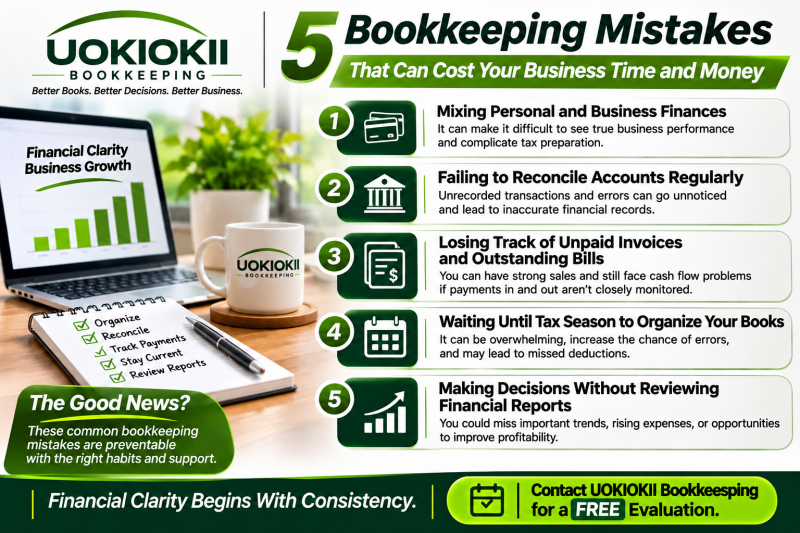
- Mixing Personal and Business Finances
Using the same bank account or credit card for personal and business expenses might seem convenient, especially when starting a business.
However, mixing transactions can make it difficult to determine how much your business is actually spending and earning.
It can also complicate tax preparation and make it harder to identify legitimate business expenses.
A Better Approach
Maintain separate accounts for business transactions and establish a consistent process for recording expenses.
Separating personal and business finances helps create cleaner records, simplifies reconciliation, and provides a clearer picture of business performance.
Remember: Organized financial records begin with keeping business transactions identifiable and properly categorized.
- Failing to Reconcile Accounts Regularly
Your accounting records and bank statements should tell the same financial story.
But what happens when they don't?
Unrecorded transactions, duplicate entries, bank fees, and processing errors can cause differences between the two.
Without regular reconciliation, these discrepancies may go unnoticed for months.
A Better Approach
Reconcile bank and credit card accounts monthly, or more frequently when transaction volume requires it.
Regular reconciliation helps identify errors, verify transactions, and maintain confidence in your financial records.
Remember: Reconciliation isn't simply about making numbers match. It's about confirming that your records accurately reflect financial activity.
Need help keeping your accounts reconciled and your financial records accurate? Explore UOKIOKII's Bookkeeping Services to learn how professional bookkeeping support can help.
UOKIOKII's Bookkeeping Services
- Losing Track of Unpaid Invoices and Outstanding Bills
A business can generate significant sales and still experience cash flow problems.
Why?
Because revenue and available cash aren't always the same thing.
Customers may have outstanding invoices, while vendors, payroll, and other financial obligations still require payment.
Failing to monitor these amounts can create unexpected financial pressure.
A Better Approach
Review accounts receivable and accounts payable regularly.
Know which customers owe you money, when payments are expected, and which business obligations are approaching their due dates.
This information can help you plan expenses and manage cash flow more effectively.
Remember: Knowing what's coming in is important. Knowing what's going out is equally important.
- Waiting Until Tax Season to Organize Your Books
For some business owners, bookkeeping becomes a priority only when tax deadlines approach.
Unfortunately, organizing an entire year's financial activity at once can be overwhelming.
Missing receipts, incorrectly categorized transactions, and unreconciled accounts can create unnecessary work and increase the possibility of errors.
A Better Approach
Establish a consistent bookkeeping routine throughout the year.
Record transactions promptly, maintain supporting documentation, and review financial records regularly.
Accurate, current books can make tax preparation more manageable and provide useful information long before tax season arrives.
Remember: Bookkeeping should be an ongoing business practice, not an annual emergency.
- Making Decisions Without Reviewing Financial Reports
Many business owners monitor their bank accounts but rarely examine their financial statements.
While knowing your cash balance is important, it doesn't provide the complete financial picture.
Financial reports can help answer questions such as:
- Is the business generating a profit?
- Which expenses are increasing?
- How much money do customers owe?
- What financial obligations are outstanding?
- Is the business positioned to meet upcoming expenses?
A Better Approach
Review your profit and loss statement, balance sheet, and cash flow information regularly.
Understanding these reports can help identify trends, evaluate performance, and support more informed decisions.
Remember: Financial reports aren't just documents for accountants. They're tools for business owners.
The Real Cost of Poor Bookkeeping
The cost of bookkeeping mistakes isn't always immediately visible.
Sometimes it appears as additional hours spent searching for missing information.
Other times, it shows up as overlooked expenses, delayed customer payments, or decisions made without reliable financial information.
Over time, those problems can affect productivity, cash flow, and profitability.
But there's another way to look at it.
Every hour you spend correcting avoidable bookkeeping mistakes is an hour you could have spent serving customers, developing your business, or enjoying life outside of work.
Good bookkeeping isn't simply about keeping records.
It's about creating the financial clarity needed to operate your business with greater confidence.
Financial Clarity Begins With Consistency
You don't need to wait until your financial records become overwhelming to improve your bookkeeping practices.
Small, consistent improvements can make a meaningful difference.
At UOKIOKII Bookkeeping, we help businesses maintain organized financial records, understand their financial position, and make better-informed decisions.
Whether you're starting a new business or managing an established one, dependable bookkeeping can help you focus on what matters most.
Better Books. Better Decisions. Better Business.
Want to know where your bookkeeping stands? Contact UOKIOKII Bookkeeping for a FREE evaluation.